The Distilled Spirits Council of the United States (DISCUS) is bringing a curated group of American spirits producers to Brisbane tomorrow for a free trade tour to connect directly with importers, bartenders, and retailers. Visiting representatives include BroVo Spirits, Liberty and Plenty Distillery, Middle West, Noble Oak, Old Elk, Proof and Wood Ventures, Traverse City, Virginia Distillery Co. Alongside the visiting brands, attendees will also be able to sample new SKUs from High West, Jack Daniel’s, Nelson’s Green Brier, Old Forester, Penelope, and Woodford Reserve.
Details: Midday – 4pm, Thursday 30 July at Blackbird Bar & Restaurant. Register for free here.
Boothby Brisbane is our weekly newsletter briefing unpacking what’s happening in Brisbane’s bars, and talking to the bartenders and operators shaping the scene — sent every Wednesday. Get on the email list here.
Last night in Sydney I had the pleasure of dining at the US Consul General’s residence with some American distillery owners and distillers, at a media dinner and tasting organised by DISCUS, which is the peak trade body for American distillers. There were some very good bourbons, an excellent sherry cask American single malt whisky from Virginia Distillery Co. , and a killer genepi — like a Yellow Chartreuse alternative of sorts — from Brovo Spirits.
Those folks are on their way to Brisbane today, with a trade tasting happening tomorrow afternoon at Blackbird — you’d be well advised to go check out some of the unique independent distillers on offer, some of which you won’t be able to taste anywhere else in the country. You can register here.
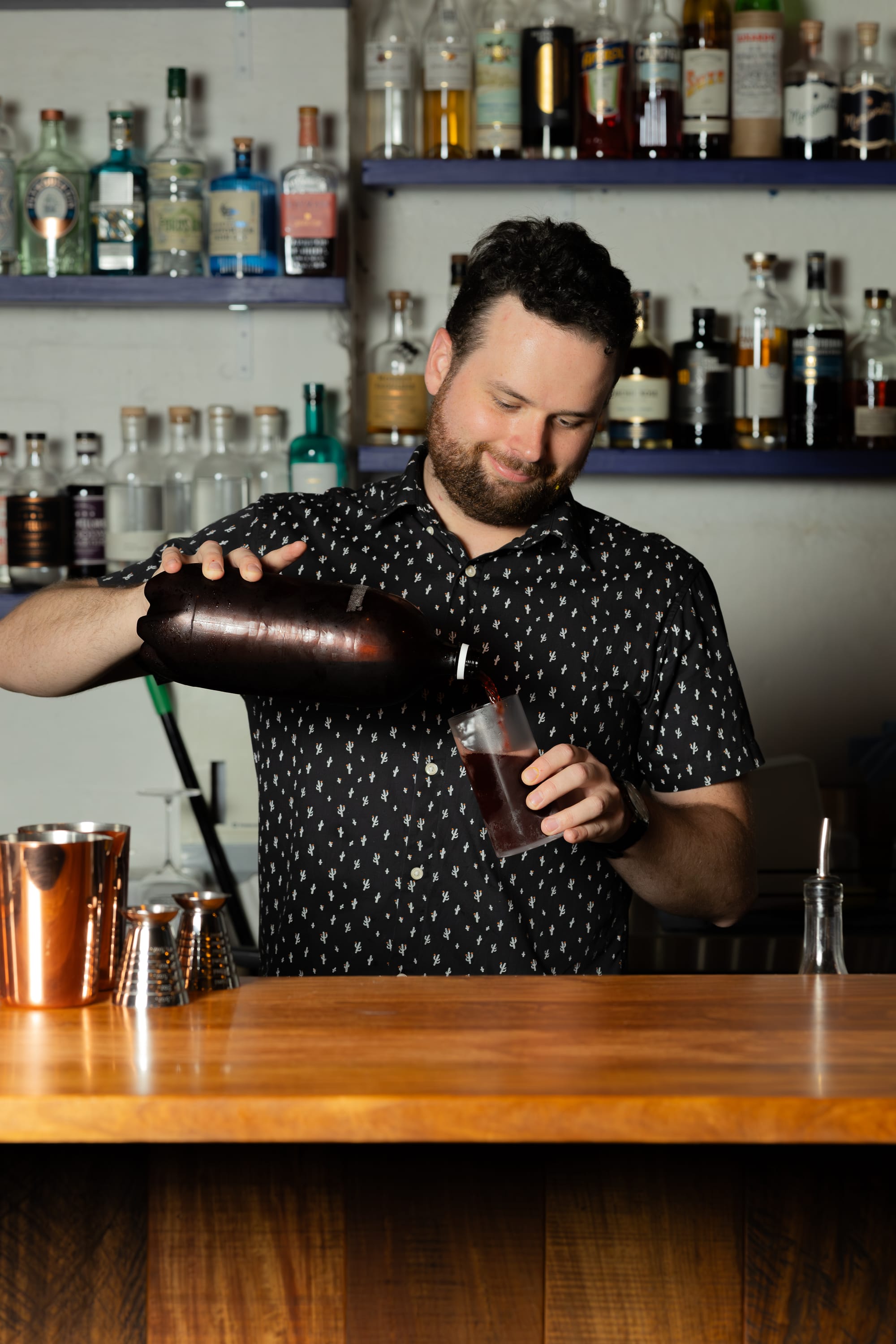
In today’s newsletter I’m speaking to Aidan Perkins, who has just finished up a successful run opening Milquetoast in the CBD, and designing the drink program for Restaurant Venner. I always enjoy talking to Aidan, because he makes great drinks in a considered way, and is someone who thinks deeply about this stuff.
Now, he’s also someone who is thinking deeply about tips in hospitality and trying to get some change happening, with a petition he started this week. It’s all aimed at getting some sort of legal framework in place to regulate how tips are processed by employers. As he says below, there is no legal obligation to businesses to pass on tips to their employees, as many a bartender has found out the hard way in the past.
I think he’s suggesting a very workable, no-nonsense and easy to implement framework for tips, and I’d love to see governments take it on. So read about the petition and the reasons behind it in the chat below, and take a look at the petition for yourself, right here.
BOOTHBY: Tell us about this petition — give people the broad idea of it.
AIDAN PERKINS: Most people in Australia, if you were to ask them in the street, would not be aware that if they were to leave a tip for any hospitality worker in this country, there is no legal framework for those employees to receive the tip. There is none. You’re essentially acting on the good faith of the business to pass on that gratuity to the employee for their exceptional service.
Now, most businesses do do this out of good faith. They also do it because they know if they don’t pass on tips, there’s going to be a staff revolt, and it’s poor publicity.
But the lack of a legal framework, the lack of legal obligations means that we are leaving the door open to bad actors. We’re leaving the door open for employers or businesses to take advantage of tips, and, in the worst cases that I’ve heard of, actually take a cut.
So I’d like to put together a petition to present to Fair Work and the industrial relations ministers of Queensland and federally, to begin to build a framework because tipping is becoming more prevalent. We’re seeing it all the time. You can tip your Uber drivers now online. You can tip your DoorDash driver, and every single hospitality business now, when you go to pay, has that little pop-up screen asking how much do you want to tip.
There’s a lot of restaurants and bars out there who are even mandating tips, if there’s certain really busy times, or for large groups, they add on an automatic gratuity, and that’s great. But there’s no legal guarantee that the employees are going to get that.
BOOTHBY: It’s just going into consolidated revenue, right?
AIDAN PERKINS: Yep, that’s it.
BOOTHBY: How do you go about this then? How do you think about building a framework for this? Because obviously people do tips different ways, it can be to the server directly or it can be pooled with everyone on the floor or the bar, or it could be pooled with back of house, different splits. What do you think is a good way to go about accommodating these different methods of processing tips?
AIDAN PERKINS: What I’m advocating for is a very basic framework, that says that employers in hospitality have an obligation to pass on tips to employees. That’s number one. That way staff know that they’re getting tips, they don’t have to fight for them.
And number two, you’re right, there are lots of different ways of paying out tips. I don’t want to take that choice away from businesses. So I would like there to be an obligation for businesses to have a written tipping policy. One that staff and patrons can access. So staff know how tips are being divided, and patrons, when they want to give a tip, can have some clarity about how that tip’s going to be divided.
BOOTHBY: That sounds pretty reasonable, right? That’s a two-pronged approach — there’s an obligation to pass on the tips, and an obligation to have a policy as to how you do it.
AIDAN PERKINS: I’ve worked in lots of different systems, and the system that I really like is tips being pooled together and divided equally amongst staff based on how many hours those staff have worked.
But there are also arguments for other systems that I’ve worked in. I’ve worked in systems where tips are based on tenure, rewarding staff for being there for longer. I’ve worked in systems where the tips go directly to the person who is receiving it. There are lots of different ways you can do that. I don’t think that businesses shouldn’t have a choice in how they divide out tips.
BOOTHBY: You’re not saying that there should be a law that prescribes exactly how tips are divvied up. That would be unworkable, right?
AIDAN PERKINS: Exactly. That brings us closer towards a US-style system where there’s very specific laws about paying out tips and about how much you can then give employees wages, because they get tips.
BOOTHBY: Are you saying that tips are becoming more prevalent again? Because after the introduction of PayWave and tapping to pay, there was a lot of chat about it being the death of tips.
AIDAN PERKINS: I actually think it is now turned around. When I started in hospitality about 12 years ago, tips were not that prevalent. With the introduction of tapping cards, more card payments and more online payments — think about when you scan a QR code — there are now all these pop-ups for tips when you go to pay. That option is being presented to guests all the time.
Most employers that I have worked for, and that I have seen, do the right thing. But I have also been in situations where I get called in and told I’m not going to get my tips next month unless I pass a written exam based on wine knowledge.
BOOTHBY: There’s long been tip tests, right? Where you’re working on a bar, and you’ve got to have a certain level of knowledge to get to the next level of tip share.
AIDAN PERKINS: And look that that’s a completely reasonable way to do it, but there has to be a written policy on that. I’ve worked in places where our tips are paid out monthly and essentially the cost of breakages is deducted from that before we get it — a practice which would be illegal if it was wages.
BOOTHBY: But tips are effectively wages, right?
AIDAN PERKINS: Under Australian law, they do not count as wages.
BOOTHBY: But you are supposed to pay tax on them, so they are income?
AIDAN PERKINS: You are supposed to pay tax on them, but they do not make up your wage.
BOOTHBY: Right. You’ve just left Milquetoast, so what’s next for you?
AIDAN PERKINS: Well apparently my first day of not working involves sending emails to members of parliament.
BOOTHBY: Going into politics, very good.
AIDAN PERKINS: Didn’t expect that one.
BOOTHBY: Well, it’s good to stay busy.
AIDAN PERKINS: What’s next for me is I finished up at Milquetoast and Venner. I’ll be going on my honeymoon in a couple of weeks’ time to Europe. And then I will be returning to Brisbane and I will be figuring out what I’m doing then. I have a lot of opportunities, and a lot that have come out even just in the last week when people have known that I’ve been moving on. So I don’t know yet, but I’ll figure something out.